How to Follow Up With Refractive Surgery Leads
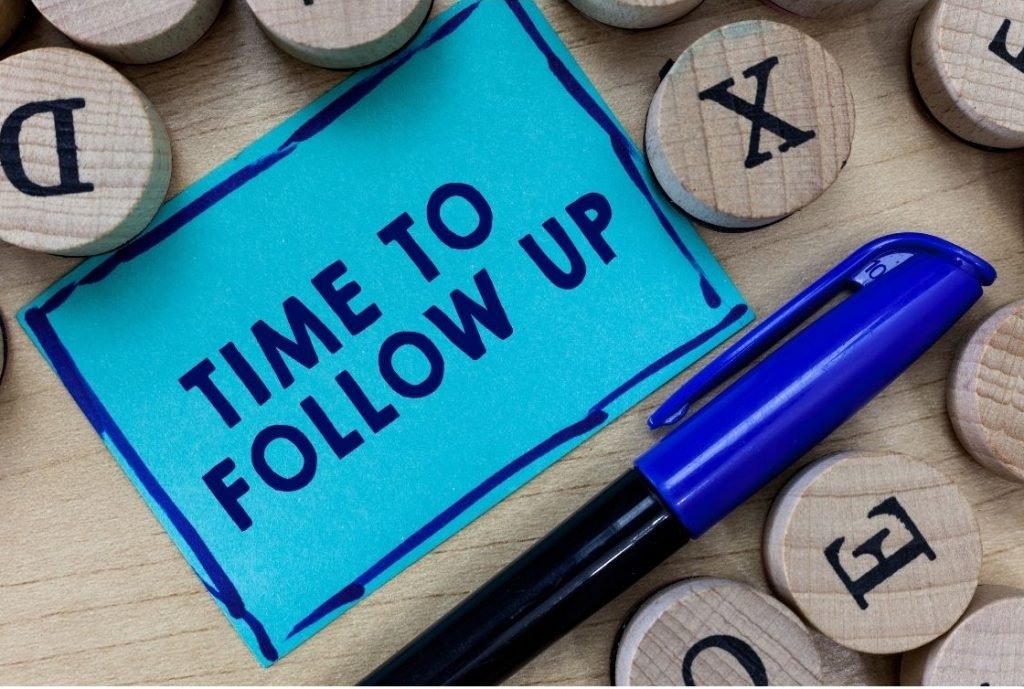
There is a moment that almost every refractive surgery coordinator knows well, and it sits at the heart of why knowing how to follow up with refractive surgery leads is one of the highest-leverage skills in a practice. A patient came in for a consultation, the exam went well, they seemed genuinely interested, and then they left saying they needed to think about it. You followed up once. Maybe twice. And then somewhere between not wanting to be annoying and not knowing what else to say, the follow-up stopped. The patient never scheduled. The surgery never happened.
That gap, between a promising consultation and a booked procedure, is where more refractive revenue is lost than almost anywhere else in the patient journey. And the reason most practices fail to close it is not that they follow up too aggressively. It is that they follow up without a purpose, without a system, and without understanding what the patient actually needs to hear at each stage of their decision.
Following up with refractive surgery leads without being pushy comes down to one principle: every touchpoint should give the patient something useful rather than simply asking them to schedule. A follow-up sequence that educates, validates, and stays present across phone, text, and email, over three, six, twelve, and yes…even fifteen months, keeps the relationship alive without creating pressure. Relevance, not frequency, is what separates helpful follow-up from the kind that drives patients away.
A coordinator who calls a patient three times in a week with nothing to say except “just checking in” is being pushy. Multiple touchpoints sustained for a year or more combined with something genuinely useful to offer is being helpful. The patient experience of those two approaches could not be more different, even though the second one involves more total contact.
Why Refractive Surgery Leads Go Cold
Before talking about how to follow up, it is worth understanding why patients go quiet in the first place. Most practices assume that a patient who stops responding has made a decision, either to go somewhere else or to abandon the idea altogether. That assumption is wrong more often than it is right.
Refractive surgery is a significant, elective, permanent decision. Patients are not slow because they are disinterested. They are slow because they are careful. Research suggests that the typical refractive decision cycle runs well over a year from initial awareness to scheduled surgery, though that number varies considerably by practice and market. Many patients consult, leave genuinely intending to move forward, and then get absorbed back into the rhythm of ordinary life. The contacts go back in. The glasses go back on and the urgency fades.
What those patients need is not pressure. They need a reason to re-engage with the decision. They need someone to give them new information, answer a question they have been sitting with, or simply remind them in a low-stakes way that the door is still open. That is what a good refractive surgery lead follow-up system does.
The Foundation of a Refractive Surgery Follow-Up System
The single biggest mistake practices make in their follow-up process is treating every outreach as a version of the same message: are you ready to schedule?
When every follow-up is a soft ask to book, the patient quickly learns that contact from your practice means someone is going to ask them for something. That is the dynamic that feels pushy, and it is the dynamic that causes people to stop answering the phone.
The alternative is to give each touchpoint in your sequence a specific job to do, and to make sure that job is oriented around helping the patient rather than advancing the sale. In practice, this means varying what you lead with across different contacts.
Some touchpoints should educate. If a patient’s main hesitation was concern about dry eye after LASIK, your next follow-up should include something that speaks directly to that. A short email explaining how the technology your practice uses reduces the risk of post-operative dry eye, or a link to a video where your surgeon addresses the question, is a genuinely useful piece of communication. The patient learns something. Their concern gets addressed. And the relationship with your practice deepens in a way that no amount of checking in ever could.
Some touchpoints should validate. Patients who are on the fence often benefit from hearing from people who were in exactly the same position. A follow-up that shares a patient story, a testimonial video, or a brief account of how a former patient made their decision and how it turned out gives the undecided lead a way to see themselves on the other side of the choice.
Some touchpoints should simply keep the connection alive without asking for anything. A genuinely low-pressure check-in, framed as making sure the patient has what they need and leaving the door open, can actually be more effective than a more aggressive close because it removes the sense that every communication is transactional.
And yes, some touchpoints should include an invitation to schedule. But that invitation should come after you have earned the right to ask for it through consistent, relevant, helpful communication, not as the opening line of every outreach.
Channel Mix in Refractive Surgery Lead Follow-Up
How you reach out is as important as what you say. Most refractive practices default to phone calls because they feel more personal, and while a phone call at the right moment is genuinely effective, a sequence built entirely on phone calls creates its own problems.
Many patients, particularly younger ones who are the core demographic for LASIK and SMILE, actively avoid answering calls from numbers they do not recognize. If your only follow-up mechanism is a call that goes to voicemail, you are essentially hoping the patient will take an action on your behalf. Most will not.
A follow-up sequence that blends phone calls, text messages, and email reaches patients across multiple channels and lets them engage in whatever format feels most comfortable to them. Text messages in particular are underused in refractive surgery follow-up. A short, warm text that does not require a response, something along the lines of letting the patient know you are still here if they have questions, performs well because it is low friction and easy to reply to when the moment is right.
Email works best for educational content and longer-form communication. Phone calls work best for relationship building and direct conversation. Texts work best for light touchpoints and quick invitations. Using all three strategically throughout a sequence gives you coverage without redundancy.
Follow-Up Timing: How Long to Stay in the Sequence
One of the most consequential decisions in a refractive surgery lead follow-up system is when to stop. Many practices stop too early, often after two or three attempts in the first couple of weeks post-consultation. By that logic, they are writing off patients who are genuinely still interested but simply not ready yet.
A follow-up sequence for refractive surgery leads should run significantly longer than most practices are comfortable with. The first few weeks after consultation should have more frequent touchpoints, perhaps three to five contacts over the first month, with a front-loaded approach that capitalizes on the momentum of the in-person visit. After that initial window, the cadence should slow but not stop. Monthly contact for at least nine to twelve additional months is reasonable. For patients who showed strong interest and expressed a specific timing hesitation, like waiting until after a vacation or until an FSA resets, the sequence should extend to cover that window.
A patient who consulted in February and mentioned they were planning to travel in April should hear from your practice again in May, without fail. That kind of precision, remembering what a patient told you and following up when it becomes relevant, is the opposite of pushy. It demonstrates that you were listening.
What to Say When a Refractive Lead Finally Responds
The follow-up that eventually gets a response is often not the most clever or the most persistent. It is usually the one that happened to arrive at the right moment in the patient’s life. When a patient re-engages after weeks or months of silence, the response from your team matters enormously.
The wrong move is to immediately pivot into close mode. If a patient responds to an email at month three saying they have been thinking about it and wondering about the process, and your coordinator comes back with a hard push to schedule before a promotion ends, you have just confirmed every hesitation the patient had about feeling pressured.
The right move is to treat the re-engagement as the beginning of a genuine conversation. Thank them for reaching out. Ask what questions have come up since their consultation. Offer to get them back on the phone with the coordinator or back in for a follow-up visit if they want to review anything. Move toward a scheduled next step, whether that is a call, a revisit, or a surgery date, but let the patient lead the pace of that final stretch.
Automating Your Refractive Surgery Follow-Up Sequence
Many practices are now using CRM tools and automated follow-up sequences to handle at least part of this process, and done well, automation is genuinely valuable. It removes the burden of manually tracking where every lead is in the sequence and ensures that patients do not fall through the cracks simply because a coordinator is busy.
The risk with automation is that it can strip the follow-up of the specificity that makes it feel human. An automated email that addresses a patient by name but speaks in generic terms about the benefits of LASIK is better than nothing, but it is not the same as a follow-up that references what the patient actually told you during their consultation.
The best approach is to use automation for the structure and the timing of your sequence, and to layer in personal touches at the moments that matter most. The first follow-up after a consultation should always feel personal. The follow-up that arrives around a patient’s stated decision window should feel personal. The rest of the sequence can carry more automation weight, as long as the content is relevant and the tone stays warm.
The Mindset Shift That Changes Everything
Ultimately, the difference between follow-up that feels pushy and follow-up that feels helpful comes down to what your team believes they are doing when they reach out.
If a coordinator believes their job is to get the patient to schedule, every follow-up will carry the weight of that agenda, and patients will feel it. If a coordinator believes their job is to help a genuinely interested patient work through a significant decision and get to a place of confidence, the entire tone of the communication shifts. The questions are different. The patience is different. The willingness to meet the patient where they are is different.
Patients who feel guided rather than sold to do not just convert at higher rates. They refer other patients. They leave better reviews. They come back for additional procedures. The long-term value of a follow-up culture built on trust rather than pressure is substantial, and it compounds in ways that a booked-surgery-only metric will never fully capture.
The goal of any refractive surgery lead follow-up system is not to chase the patient to a yes. The goal is to stay present, stay useful, and be ready when the patient decides they are ready. For the patients who are genuinely going to convert, that approach is always enough.